


:The inside scoop:
What Is
Intent-Based Marketing?
A Plain-English Guide
Intent-Based Marketing?
A Plain-English Guide
Most marketing starts with a guess. You pick an audience — homeowners aged 35 to 55, business owners in a certain zip code, whatever fits the demographic you think buys from you — and you hope enough of the right people are standing inside that net.
Intent-based marketing throws that model out. Instead of broadcasting to a crowd and hoping, you’re reaching specific, named people who have already shown you — through their actual online behavior — that they’re in the market for what you offer, right now.
"Intent-based leads are not based on marketing guesswork. They are really people looking for your solution to their problem."
That’s the entire shift in one sentence. Here’s what it actually looks like in practice.
The Old Way: Marketing by Guesswork
Say you’re in mortgage lending. The traditional approach tells a platform to reach homeowners aged 35 to 55 in Florida, and hope some fraction of them are ready to refinance. It’s a demographic bet — reasonable-sounding, but ultimately a guess dressed up as a strategy.
Intent-based marketing identifies the specific homeowner who spent 20 minutes this week reading about refinancing across three different sites — and puts your message directly in front of that person, while they’re actually looking.
How It Actually Works
Underneath the concept, the mechanism is simpler than it sounds. These 4 things happen, in order:
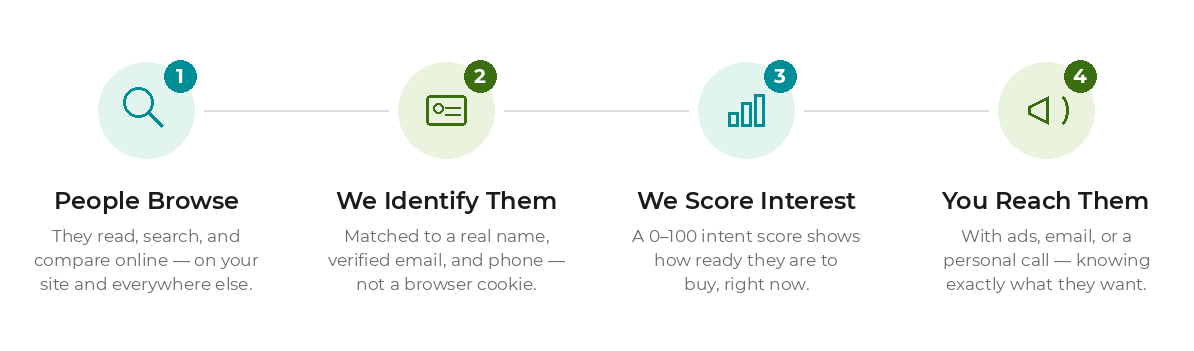
- People browse. Someone is out there right now — researching, comparing, reading — on your site and everywhere else on the web.
- They get identified. That activity gets matched to a real person: a verified name, email, and phone number — not just an anonymous browser cookie.
- Their interest gets scored. Every person receives an intent score from 0–100, based on how intensively they’re engaging relative to their own baseline. A score of 75 or above generally means someone is actively in a buying cycle, not just casually browsing.
- You reach them. With that score in hand, you have a real choice — run ads directly to them, send a personalized email, or have your team make the call, already knowing exactly what this person cares about.
It’s Not Just Your Website
This is the part that surprises most people the first time they hear it. The same person reading an industry article, searching for solutions, or browsing a competitor’s pricing page is still one real, identifiable individual — and the system connects all of that activity back to them, not just what happens on your own domain.
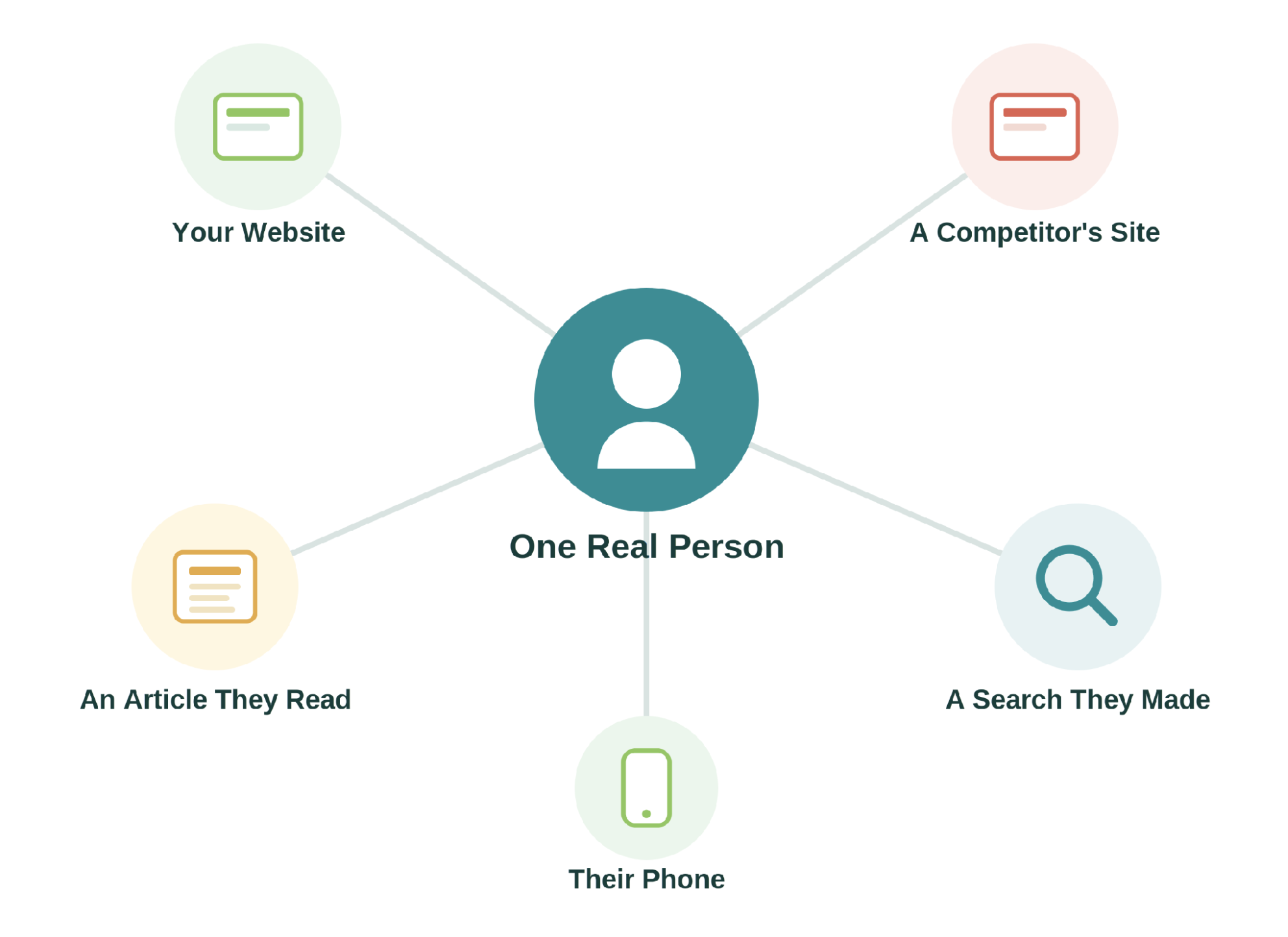
That means you can identify someone actively comparing you against a competitor, or researching the exact problem you solve, before they’ve ever landed on your site at all. It’s why intent-based platforms consistently surface more relevant activity than tools like Google Analytics, which only ever sees the fraction of traffic that lands directly on your own pages and accepts cookies.
Stop Guessing Who Might Buy. Start Reaching Who Already Is.
That’s really the whole philosophy in one line. Traditional advertising shows your message to everyone, hoping someone bites. Intent-based marketing shows it only to people who’ve already raised their hand — just not to you directly, yet.
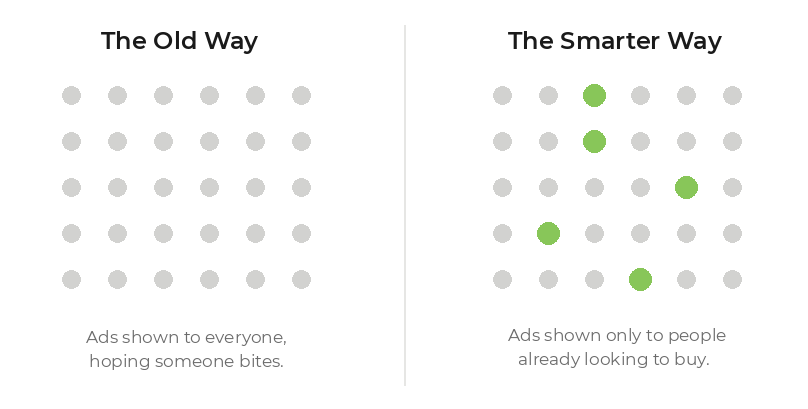
The businesses that adopt this early aren’t winning because they found a secret. They’re winning because they stopped paying to reach people who were never going to buy, and started spending that same budget on people who already are.
Meg Dubbs is the founder of MD Marketing & Design, helping businesses align strategy, design, marketing, sales, and technology to scale with purpose and clarity.